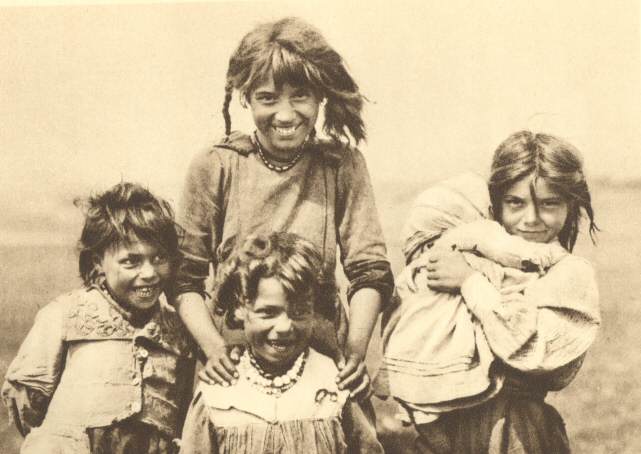
Genocide and forced sterilization: “Gypsies” and travellers in Norway have throughout history been subject to erasing from our collective memory.
(Written by: Benedicte Hilde Tandsæther-Andersen)
((Photo: Found in “The Gypsy’s Parson”, by George Hall. Subject to no known copyright.))
The fall had set in for real in Rhineland — a German province — on November 11th, 1835. And this day would go into the history books: a landlord in the area had for some time observed the “zigeuner” — the gypsies traveling through the forests and across his plains. Gypsies were seen as permanently outlawed, and generous bounties were awarded to those who managed to catch the most. On this particular day, it seems that the annoyance of having “zigeuner” people on his land had reached a boiling point: So along with the guests who visited this Rhinland estate regularly, an idea was adorned. Later that same afternoon, the well-dressed men decided to take their horses and loaded guns with them, into the forest. They were going to hunt — for people.
Despised everywhere
The above-mentioned event — the hunt — isn’t unique, but it is most likely the only “zigeuner hunt” that has been mentioned in a hunting logbook. Similar hunting raids occurred both in the centuries before 1835 — and in the centuries that have come and gone since — and the victims were sometimes photographed as well. The documentation that the hunt had taken place was important, both for one’s good reputation and for the sake of the bounty. Even in our time, there are murders associated with this macabre “hunting tradition”.
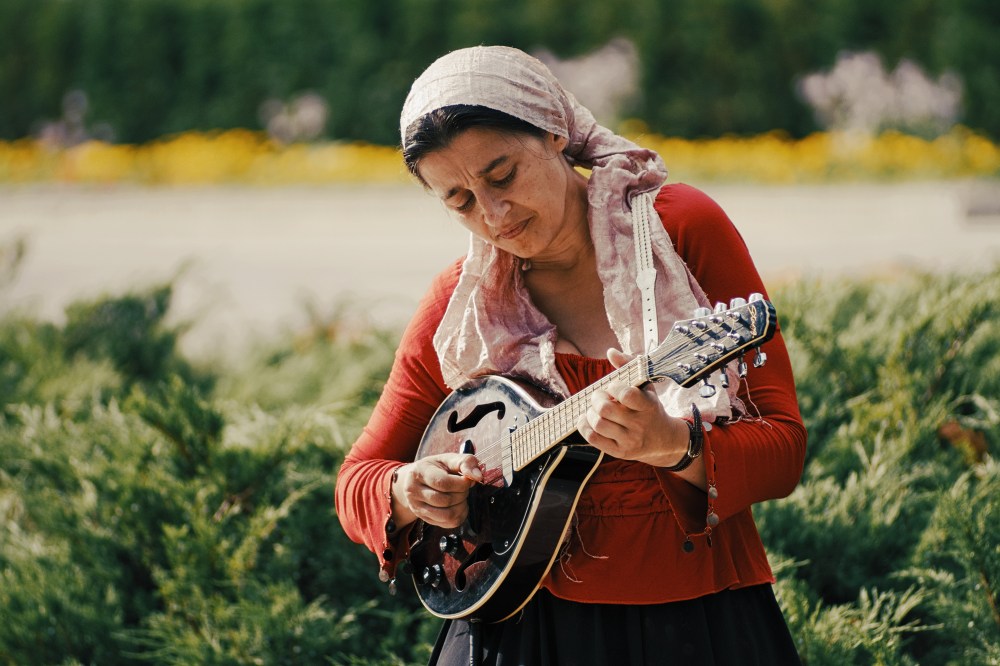
A woman (wearing a traditional headscarf) plays a mandolin. Photographer: spoilt.exile / Flickr
Through the centuries, two of Europe’s most despised ethnic groups have been forcibly repressed out of our “collective memory” — what we as a culture decide on remembering through books, education, movies, news articles and awareness campaigns. The “gypsies” and the “travellers” (today formally called “roma” and “romani”) – can be hard to find in the archives. We usually have many names for the people we love, but over the centuries, these people have rarely been any society’s “loved one”. In the census, they are referred to by many different names — “travellers”, “homeless,” “poor,” “thieves,” “criminals,” but also as “beggars” and “gypsies”. In Norway, it is relatively easy to distinguish between the two groups: the romani people have been in Norway for 500 years, while the roma came to the country about 160 years ago. Elsewhere in Europe, they are often seen as one big — and hated — group of people.
The disease in the bloodline
During the centuries when Europe’s countries were largely homogenous, there was — first and foremostly — the exterior looks that “gave away” what heritage the roma and romani people were of, when they arrived in new places. They were easy to recognize as “foreign” to Europeans, who weren’t used to having these “exotic” people in their everyday life.
The romani and roma people often had colorful wagons, the women wore headscarves and big skirts, had countless children running around — and men with broad-brimmed black hats, and often a horse. These “stranger” groups also — often — had tanned skin and dark hair, which made them very different from the overall populations in several European countries. People viewed the dark complexion as signs of a disease — an infection that one should be guarded against: “You can see it for several generations if someone in the family has been with a gypsy”, people told each other when they talked about acquaintances of a questionable origin.

Many families still use their wagons while travelling. Photo: © dejank1 — stock.adobe.com
The dangerous women
Roma and romani women have been particularly vulnerable. There have been several stories and rumours of roma and romani women who have fallen for both peasants and wealthy men, and who have been morally — and legally — punished for it. Despite the fact that their own cultures often strictly forbid any sort of connections between the two ethnic groups and the wider population, the myth of “the seductive gypsy” has lived on for centuries. The myth still thrives in paintings on many living room walls — and also in the Disney movie “The Hunchback of Notre Dame”. Roma and romani women have been collectively stigmatised as having “low sexual morals” — and this resulted, though a 1934 sterilization act in Norway, in consequences for at least 125 romani women.
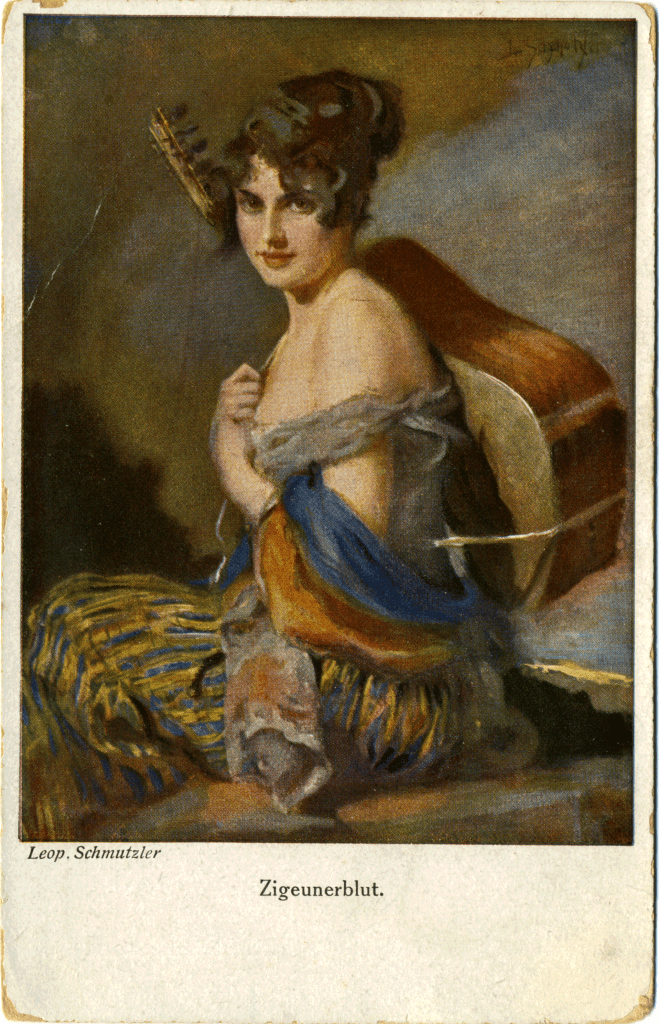
Photo: A seductive woman of “zigeunerblut” — “gypsy blood”. Found on www.sintiundroma.org
The invisible genocide
It was the “Norwegian Mission Among Homeless People” (Norsk Misjon for Hjemløse) — often shortened to “the Mission” — which was tasked with slowly, but surely taking the romani way of life away from romani people in Norway. The sterilisation program was the responsibility of the Mission for more than a hundred years, from 1897 to 1989. It is actually impossible to know how many were sterilised without being registered or informed about the procedure. What is certain, is that all sterilisation occurred at state hospitals: Some may have been performed in connection with births, but also children who thought they were on a simple medical check-up might have been sterilised. The fact that these romani people never had their own children were not necessarily connected to the procedure, which sometimes happened early in their childhood. An invisible genocide has probably taken place at Norwegian hospitals — under the Christian guidance of the Mission — a genocide where no one could be killed, because they never had the opportunity to be born.
“The gypsy paragraph”
The roma people were not part of the sterilisation policy — partly because they represented a much smaller group in Norway — but they were also at risk of being deprived of their children, in the first half of the 20th century. To avoid the Norwegian state’s policies towards roma children, many families chose to leave the country.
Norway’s “contribution” to the genocide of roma during the Holocaust became the “gypsy paragraph”. From 1927 and onwards, this particular law ensured that the Norwegian groups of roma were denied access to the kingdom, despite being born and raised there. This also affected the families that had escaped from the country a few years earlier, and hence, about 100 Norwegian Roma people died in “Porajmos” — the Holocaust of Roma and Romani people.
Porajmos — “the devouring”
Surprisingly many of the pictures which today are used to illustrate prisoners’ lives in the concentration camps during the Holocaust, actually show romani people and roma people. Even today, this is not known to most people, and in many places they are misrepresented as jewish people or Jehovah’s Witnesses. In the consciousness of people living today, it might seem as if the romani people and roma people never were under any threat at all — as they are “impossible” to see in the pictures.
The infamous — and very feared — officer and physician Josef Mengele was (for a relatively short duration of time) the medical officer for the “gypsy camp” in Auschwitz-Birkenau, before becoming the chief doctor of the camp as a whole. Mengele — often nicknamed “The Angel of Death” — had a special interest in experiments performed on twins — and the remaining survivors of these experiments could tell many stories of how he often stood at the train station when new prisoners arrived. He would make the selection of whom he were to conduct experiments on. And just like the jewish people, the roma people and the romani people were classified as “enemies of the race-based state” under the Nazi regime. Today, historians believe that 220.000 – 500.000 romani people — and one million roma people — were killed in the concentration camps.
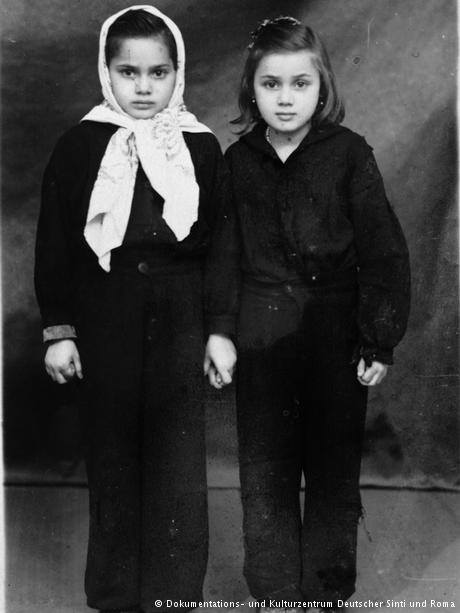
Photo: The two sisters Senta and Sonja Birkenfelder were deported from Ludwigshafen in Germany, to Poland, in 1940. This photo was probably taken after they arrived at the Radom Ghetto, in 1941. Copyright: Dokumentations- und Kultursentrum Deutscher Sinti und Roma
Romani people and roma people today
Today, the romani people have been assimilated into the Norwegian society — we do not hear about them on the news, and in cultural terms they are hardly visible in the public’s consciousness of what Norway is. Despite having 500 years of history in Norway, they are often not included in the “History of Norway”. There are still romani people who have seen the Holocaust / Porajmos with their own eyes, and experienced the Mission’s efforts to reduce their numbers. The policy was accepted and explained in many communities, and there has still not been taken any major steps towards properly dealing with these attitudes. This compares well to how the vast majority of Norwegians today are horrified by the Holocaust and how this genocide wanted to exterminate the jews, but fail to know about the other “undesirable” groups of people. Romani people have been made invisible in today’s society, and regrets from prime ministers do little for those who still live with their own and relatives’ trauma.
Roma people, however, can nowadays be said to constitute a parallel society — where strong traditions related to gender, age and family life still determine how the population lives. The big city, gender equality and education is rejected as harmful and undesirable for roma’s way of life. Schooling is considered a way of turning the children towards their own family and their traditions. And this, in turn, makes for several conflicts with the authorities. Young women and men trying to break free from the mould are held back by the strong forces that keep them from reaching out. It can be just as difficult to break out of family relationships, as to reach those who live in them.
«1 woman with a suckling infant»
The gypsies targeted during the aforementioned hunt in the woods of Rhineland — on November 11th 1835 — became trophies for the landowner and his friends. In the chaos that occurred when the gypsies were surprised by shots — breaking the silence of this foggy fall day — some of the wealthy guests had found a mother and her child. In the landlord’s hunting logbook, this event was since noted cautiously, for he had received the most prestigious catch of the day; “1 woman with a suckling infant”. Back home at the estate, there was honour and glory awaiting the entire hunting party, and eventually maybe a good bounty from the higher ranks of society. The logbook does not describe anything about the event in detail, and so it is not known what happened to the bodies of the gypsies afterwards.
When will a set of historical events be considered relevant to our collective history — the history of a nation? The Holocaust and Porajmos were not targeting the vast majority of people living in Europe in the years 1939-1945, yet these events are mentioned in the history books about what Europe and the world went through during that period. There is less — or nothing — about the centuries when millions of roma and romani people became victims of the “rural justice” system, performed by both poor and rich. A magazine article is undoubtedly too little to give a full view of roma and romani people’s life stories — which have taken place in Europe since the 15th and 16th centuries. There is still a long time before roma and romani people will be part of “our collective memory” about what we will not allow to happen to humanity. It still seems that there still is a long time before we, as a society, think that their stories are something worth remembering.
 Chamber of Stories and Myths